
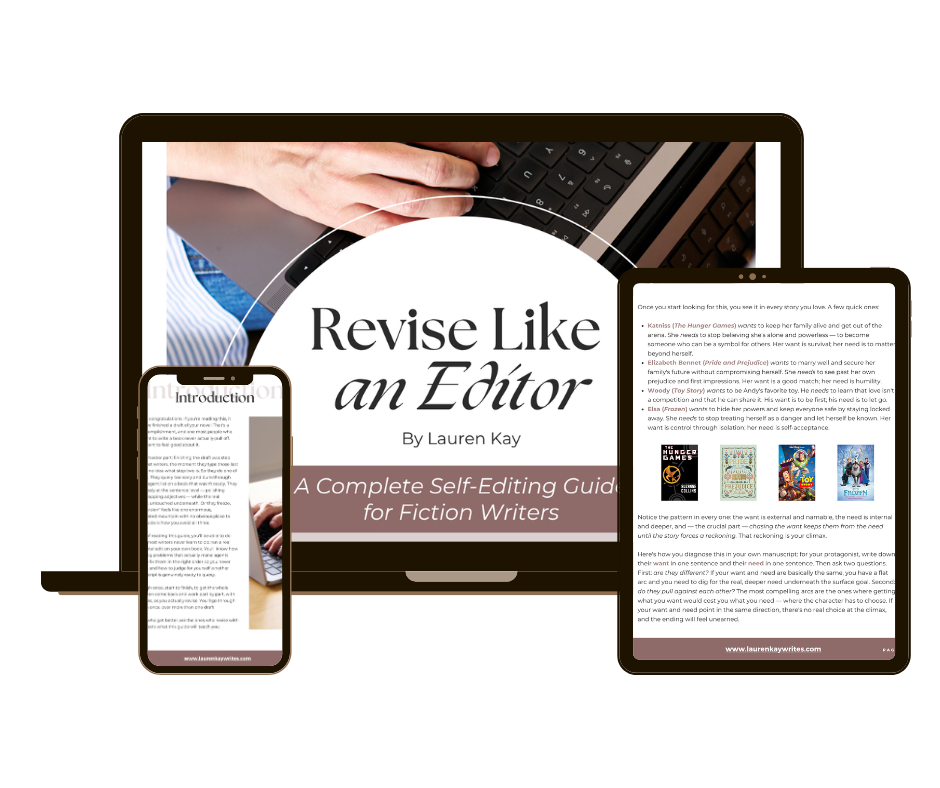
Revise Like an Editor: A Complete Self-Editing Guide for Fiction Writers
$49A complete self-editing system that teaches you to run a real developmental edit on your own novel — plus the ten templates to actually do it.
This guide is the property of Lauren Kay Writes and is for personal use only. It should not be resold or redistributed.

What's included?
The complete self-editing process, walked through beat by beat on one sample novel from first diagnosis to agent-ready
Ten fillable templates — including the reverse outline, scene audit spreadsheet, stakes map, and a complete sample editorial letter to model your own on
A step-by-step revision roadmap — the exact order to fix problems so you never waste effort polishing scenes you'll later cut
How to diagnose the big issues that make agents pass — a saggy middle, flat characters, low stakes — and pinpoint exactly what's broken
Before-and-after passages showing structure, character, and pacing problems getting fixed, plus examples from the TV show “Gilmore Girls”
And parts of my own editorial process with a Big 5 publisher — the three biggest notes I got on my 6-figure debut, and exactly how I addressed them
You finished the draft—congratulations! But finishing is just step one…
Revise Like an Editor teaches you to run a real developmental edit on your own manuscript — to find the problems that actually make agents pass, fix them in the right order so you never waste effort, and judge for yourself whether your book is genuinely ready to query.
Nine parts, worked on a single sample novel throughout so you see every fix in practice. Real before-and-after passages. The three biggest editorial notes I got on my own debut, and how I fixed them. And ten fillable templates so you're not just reading about revision — you're doing it.
What you'll learn
The four types of editing and the order that saves you months
How to reverse-outline your draft so structural problems become impossible to hide from
How to diagnose stakes, character, pacing, and structure before you change a word
What to cut, and how to make cutting psychologically survivable
Planting and payoff — the technique behind every ending that lands
How to handle feedback without revising your book into mush
Note: This guide focuses on structural, developmental edits, which is are above and beyond the most important edits to get right. Line edits come after — and will be the focus of a separate guide.
Who it's for
Fiction writers at any stage of revision, in any genre. If you've finished a draft and don't know where to start — or you've been revising for a year and can't tell if it's working — this is for you.